Paranormal Scene in Europe |
DELIGHTFUL DELUSIONS; THE WISDOM OF FOLLY
Cornelis de Jager
Sonnenborgh Observatory
3512 NL Utrecht, The Netherlands
E-mail C.deJager@sron.nl
Nearly five centuries ago, in 1511, Desiderius Erasmus, of Rotterdam but
truly Européen avant la lettre, published his book ‘Stultitiae Laus’,
meaning: ‘The Wisdom of Folly’. Its contents are a severe criticism of the world of
his days, with the central theme that folly reigns the world. The many interesting
examples of his criticism, e.g. on the church of these days, make his book worth reading.
In order to make his criticism acceptable by the rulers of his days, or stated otherwise:
to pull the weapons offhand out of the hands of his potential enemies, his critical
remarks are formulated as the sayings of an unwise woman, called folly. Such an attitude
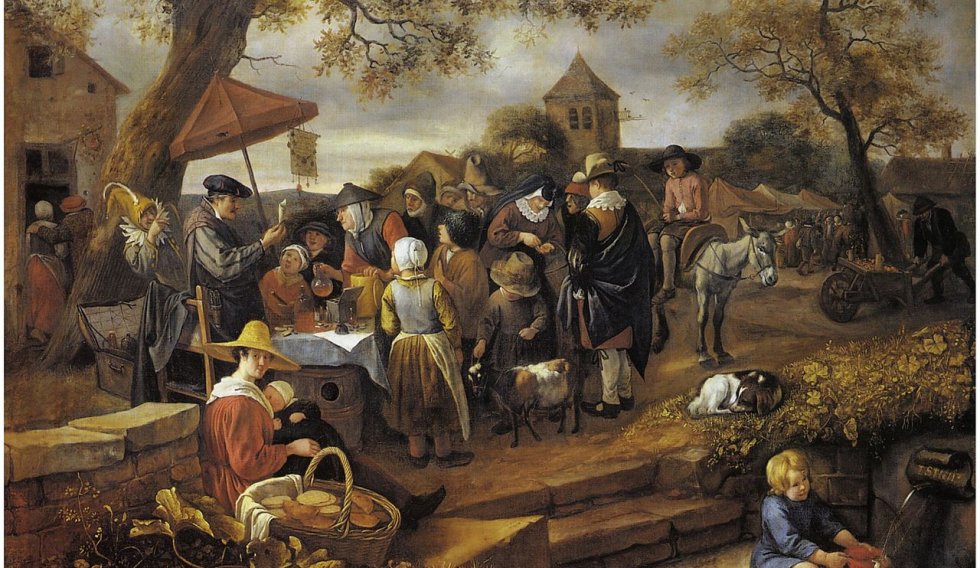
was typical for that time, at the end of the Middle Ages. Some medieval noble families had
their private court jester. The role of the jester was to sow doubt in an environment
where an absolutist form of truth reigned. The jester could be critical because he was
considered – or treated as – a fool. Also the reformers of those days sometimes used
that technique to formulate their criticism. Shakespeare speaks of ‘allowed fools’.
Such fools were evidently only tolerated at courts of rulers that were strong enough to
accept criticism. “The emperor needs the fool; the fool needs the emperor”.
Stated more generally, criticism is only tolerated in societies that are
strong enough to accept it. Translated to present-days situations this means that only a
developed democracy can be fully open to criticism.
Modern society too, has its ‘gods of our days’. The strength of the
tabloid press, the influence of mediocre teaching, the all-penetrating influence of
pseudo-scientific and paranormal ideas in society via the media, they all contribute to
creating an anti-scientific attitude that is absorbed by large fractions of society.
Stronger even: many seem to enjoy their delightful delusions. This is remarkable, since
the products of a developed scientific technology dominate modern society and science is
an integral part of society. Many hypotheses have been forwarded for explaining why
anti-scientific attitudes can develop in such a society. One of them assumes that the
recent rapid development of science cannot be absorbed by the masses and tends to create
an attitude of fear of science, for a great deal based on suspicion about the application
of its results, strengthened by bad information by the media.
With respect to these ‘gods of our days’ the role of skeptical
organisations would be counter-effective if they simply placed their absolute truth
against the other. The attitude could be more fruitful when it was that of the medieval
fools: sowing doubt and thus creating a counter-pressure against misinformation. There are
many ways to do so, one is by explaining the methods of scientific research and by
demonstrating how ‘unnecessary it is to make fantasies when the truth is so
fascinating’ (Kaler). Our forces are weak but they can present a barrier against the
avalanche of misinformation.
Let our skeptical attitude be that of the modern skeptics (Kurtz). That
attitude stands counter to the expression: “nothing is certain; not even this saying”
(Multatuli). In stead, thanks to scientific research over the ages there is a vast nucleus
of tested and verified knowledge. Uncertainty and research in progress circumscribe this
core. The scientific attitude is to accept the core and to be skeptical in the periphery
where the real work is being done. A skeptic attitude is identical to a scientific one.
One curious development of recent years deserves attention. In the last few
decades we have witnessed, all over the western world, the growth of strong environmental
pressure groups, supported by people that are rightly scared by damage of the environment
due to the growing and increasingly industrialised world population. The large financial
support received by such organisations from the community has transformed some of them
into wealthy multinationals. These evidently want to maintain the inflow of financial
support from the community. This makes such organisations vulnerable to exaggeration and
sometimes even to misinformation of the public. Also to such tendencies a critical
skeptical attitude is needed, for the sake of keeping the environmental movements on the
right track.
PSEUDOSCIENCE IN RUSSIA YESTERDAY AND TODAY
E.P. Kruglyakov
Budker Institute of Nuclear Physics
Lavrentiev Prospekt 11, Novosibirsk, Russia
E-mail: e.kruglyakov@inp.nsk.su
The end of 20th century was marked by the blossom of the
astrology, mystics, occultism, etc in many countries over the world. However, the USSR (in
the last years of its existence) and Russia take quite a specific position, in this sense.
The state of collapse, downfall of old ideals and the absence of new ones have led to that
desperate people could hope only for miracle. Rather significant contribution was also
made by Mass Media whose irresponsibility have led to that the antiscientific delirium
have just over brimmed the pages of newspapers and magazines, radio, and TV. To some
extent, the democratization of Mass Media, its freedom of the censorship resulted in its
all-permissiveness. One of the reasons of the growing influence of the pseudoscience was
the military opposition of two systems. It is known that in 1950s in the USA, there was an
inventor of antigravitation, who has got quite a large amount of money from militaries and
escaped to the South America. Similar «studies» were not started in the USSR only by
this reason. As to telepathy, these «studies» have been carried out for many years
secretly both in the USA and USSR. In recent years, the pseudoscience acquired rather
arranged forms. So, the Maharishi University appeared in the USA and the International
Institute of Terrestrial Antropoecology in Russia. The new and new «Academies» appear
practically every day and many of them are of explicitly antiscientific essence. The
pseudoscience acquires power. Alas, the bacchanalia of parascientific wanderings affects
already the highest echelons of power. Astrologists, extrasenses, and newly appeared
«scientists» of other «professions» more and more actively push through into the State
Duma, power Ministries and even into the President’s circling. In the Ministry on
Extreme Situations, the laboratory of extrasenses was arranged and in spite of the fact
that up to now they did not yet received any results, the laboratory is supported and
still exists. At the President Eltsyn Administration, there was the Guard deputy head,
general G.Rogozin whose duty additional to its main responsibilities was to make
astrological prognoses, occultism, etc. The extrasense, academician of the Russian Academy
of Natural of Science, Mr. Grabovoy performed the mental check for the President’s
airplane readiness for the flight. In the previous State Duma, a rather strange exhibition
was arranged where the main subject was the sofa-extrasense, which cured nearly a hundred
of diseases including the impotence and frigidity. The same Duma arranged debates on the
problems of UFOlogical safety of Russian people. To the credit of the present day Duma, it
does not afford anything like that.
An alternative medicine is dramatically developed attracting numerous unscrupulous swindlers robbing unhappy diseased people who cannot find help from the traditional medicine.
Finally, it is worth mentioning the ever-growing activity of the
pseudoscience in attempts to get money in power structures avoiding the standard
procedures of examination by experts. One can give many examples when pseudoscientists
managed to get money from the state sources. The most known is the deception based on the
so-called torsion fields. In addition, there are some «studies» on antigravitation,
transmutation of elements with an attempt to obtain gold (of course, not assuming the
known scheme of transmutation based on nuclear reactions but it is meant the modern
version of alchemistry).
In such an atmosphere, at the end of 1998, the President of Russian Academy
of Science Academician U.S.Osipov arranged the special Commission on the fight with the
pseudoscience and falsification of scientific results. The Commission includes 12 well
known scientists and among them two Vice-Presidents of the Academy: R.Petrov and V.Fortov.
A half of the Commission members are physicists since a major part of antiscientific
activity is related to the competence of physics.
One can say that the arrangement of the Commission and its work with Mass
Media lead to the sanitation of the situation. Some allies appeared among journalists,
astrological prognoses vanished from some newspapers and some scientific sections
appeared. Besides, scientists became often to be guests of TV programs. However, these are
only positive symptoms. To the victory over the pseudoscience is still too far.
In the paper, several examples of methods, used by pseudoscientists will be
presented.
THE NEW PARANORMAL SITUATION IN BELARUS
Kutuzova Natalia
Institute of Philosophy, National Academy of Sciences
220072 Minsk, Belarus
E-mail: philos@bas-net.by
The last ten years for Belarus is the time of the
consolidation of the sovereign state. But an effective model of national development is
not elaborated so far.
The ideological vacuum and absence of clear economic
perspectives formed perfect soil for renovation totalitarian outlook. The posttotalitarian
syndrome was expressed in activation of archaic stereotypes of public mentality and
behaviour. Researchers consider among them such as collectivism, egalitarism, search a
charismatical leader, authoritarism as a legal outlook postulate.
Belarus is polyreligious and polynational country. This
circumstance has determinated the consolidation of social and cultural groups not so much
on political, as on religious and other outlook foundations.
As for our view, the most important factors governing the
process of forming of social microgroups are the next:
* the atheistic
tradition, which has taken its roots for the last five generations;
* political inertness
of overwhelming majority of the population;
* the social
marginality;
* the connection
between the new state ideology construction and the revival of a Christianity (Orthodoxy
is becoming the state religion).
The last circumstance in connection with economic
stagnation explains the decrease of authority of traditional religions. Recently fifty
percents of the registered religious organizations have mystical orientation. Among them
there are western Krishnaism, Zoroastrism, occultism etc. Originally they have just become
the organized bearers of the paranormal activity.
Modern non-traditional religious associations are
characterized by their own social and cultural micromodels. Its fundamental features are a
strict hierarchy, a charismatical leader - mystic, ascetism and totalitarian way of life,
alternative position in relation to the society and aspire to get a political influence.
In a number of cases the members of such groups refuse a medical care and education,
giving reasons the behaviour "by the orders of occult forces". Per the last
years the legislative acts limiting state registration of occult associations have taken
effect. However the paranormal symptoms were already widely exhibited in various spheres
of culture and have called to life a number of other phenomena.
An area of practical psychology is the most vulnerable for
the paranormal influence. The priority problem of the Byelorussian psychologists has
become learning ways of manipulation by personal and public
consciousness, development of methods of a suggestion and search of possibilities of
maximum broad application of suggestive procedures — from policy and business up to the
children's cultural programs. The psychologists frequently appear in a role of conductors
of ideas of non-traditional mystical religiosity. They analyse "karma debts "
and "perspective" of reincarnation of their clients, clear chacres and so on.
For the last ten years in Belarus the alternative medicine
as official structure, practical and science research direction was folded also. Any
medical centre offers services in integral medicine, including bioresonance diagnostics
and therapeutic methods (homeopathy, colour- and sound puncture, metal- and
mineraltherapy). In structure of the Ministry of Public Health there is functioning the
department of non-traditional medicine. Some centres research effectiveness of alternative
procedures, including experience of traditional healers.
The modern development of philosophy is characterized by
holism, development of the methodological programs of a synergetics, dynamic models of
interaction of the nature and society, morphology of resonances.
However ordinary public consciousness very primitive reacts
to scientific achievements. Inevitably there is a lacuna between strict scientific
knowledge and its popular interpretations. This blank space is actively filled with
archaic magic and modern pagan rites. In the countryside it is possible to watch various
manifestations of a cult of fertility and a phobia " of the devilish eye ". In
cities it is marked sick interest to UFO, the magic divinations are very popular. It is
obvious, that the modern pagan movement with the expressed national philosophy is on the
stage of forming.
The followers of the modern occult trends actively
reconstruct difficult terminological models, which informatively reflect phenomenological
and ontological aspects of occultism. From our point of view, the learning of these
nomenclatures is interesting as a linguistic problem. However and without its detail
working out it is possible to point three essential characteristics of an occult
terminology:
1) active usage of fundamental, undefined scientific
concepts;
2) basic reducibility of a nomenclature and phraseology of
various originally
mystical trends;
3) the complicated and abstract symbolized world image.
The marked characteristics establish some reasons for the
destruction of original features of the occultism, that is for development inside mystique
of various integrated forms.
Thus, mystique, non-traditional religiosity, magic,
philosophical holism, cosmozoism, elementalism, alternative medicine are objective
phenomena for modern Belarus, which determines the present paranormal state of social and
cultural life.
CZECH PSI RESEARCH BEFORE AND AFTER 1989
Vojtěch Mornstein
Head of Department of Biophysics, Medical Faculty, Masaryk University
Joštova 10, 662 43 Brno, Czech Republic
E-mail: vmornst@med.muni.cz
The Czech paranormal community cannot be assessed without the understanding
of social development and history of the Czech nation. Three main periods, before 1948,
1948 - 1989, and after 1989 can be distinguished. In this contribution, the biggest
attention will be paid to the two last periods.
The Czech national culture was for centuries under strong influence of
German philosophy. It means that also the mysticism and all branches of paranormality were
imported from or through Germany or Austria. About one hundred years ago, Blavatsky's
spiritism and theosophy, and Steiner's anthroposophy affected many spiritually oriented
people. The Prague Jewish-German tradition (myths about Rabi Löw and his Golem),
inspiring e.g. Gustav Meyrink's novels, presented another source of mystic thinking in our
country.
During the so-called 1st Republic (1918-1938) or up to 1948,
several paranormal "scientists" appeared and should be mentioned now. The most
important three of them were probably spiritists and PSI researchers Břetislav Kafka
(author of "New principles of experimental psychology", 1891 - 1967), František
Bardon (also known as a clairvoyant, 1909 - 1958) and Květoslav Minařik (proponent of
yoga and oriental teachings, 1908-1974). We should mention that media or universities at
that time did not accept paranormal teachings. It was a phenomenon on the margins of
common interest.
Starting from 1948, the cultural connection between the Czech Republic
(Czechoslovakia) and western countries was almost interrupted. The communist regime could
not accept the philosophical basis of mysticism or parapsychology. The old Czech and
foreign authors were inaccessible to most of readers. Therefore, the people interested in
paranormal phenomena, spiritism, telepathy etc. tried to study their object of interest
simulating materialistic or even Marxist attitudes. They used soviet scientists who
sympathised with related topics or misinterpreted really existing phenomena as a
protective shield (Kirlian patterns, Matest Argest archeastronomy etc.).
The communist rule was unable to distinguish between science and
pseudoscience. That is why some „laboratories“ were allowed and financially supported.
The most important leader of such research was professor František Kahuda (1911-1987),
Czech physicist and university teacher. Prof. Kahuda was also the communist minister of
education (1956-1963). After he retired, he led the Psychoenergetic laboratory at
University of Chemical Engineering in Prague in 80’. He proposed particles of mental
energy (mentions) and published in a Czech medical journal several articles about this
hypothesis, which was consequently declined by physicists as well as biologists. Another
important pseudoscientist of communist period was Dr. Zdeněk Rejdák, editor of a book on
telepathy and clairvoyance (1970). Dr. Rejdák was very active in the international
paranormal scene. The outstanding Czech science-fiction writer Ludvík Souček (1926-1978)
can be assumed the Czech equivalent of Erich von Däniken. His books, together with
Däniken’s „Chariots of the Gods“ were printed in hundreds of thousands of copies
before 1989. They influenced, to a considerable extent, the belief in UFOs and related
problems, including paranormal phenomena, in one whole generation.
We can conclude that all forms of paranormality, and indeed any dubious
claims were allowed in communist era, if they seemed compatible with anti-religious and
materialistic official ideology. Sporadic protests of critical scientists were ignored or
even sometimes actively suppressed. It is well known that communist leaders were treated
by alternative healers or supported the existence of above mentioned pseudoscientific
laboratories. Dowsing rods and pendulums were seriously discussed at geologic scientific
conferences. In encyclopaedic dictionaries the entries like „psychotronics“ (i.e. PSI
investigation) were put on almost the same level of importance as quantum physics, for
example.
After 1989, a huge explosion of all the forms of pseudoscience can be seen.
The „old“ PSI researchers and proponents threw away quickly their materialistic
cloaks. Their laboratories were closed (due to lack of money) but they promptly turned
into big entrepreneurs in this field. The naďve journalists promoting indiscriminately
previously forbidden fruits invited these proponents to radio discussions and TV talk
shows. Thousands of articles were published in newspapers and magazines, hundreds of books
were printed about paranormal phenomena, mental power, oriental knowledge and teachings,
Tibetan monks’ wisdom, astrology, spiritual healing, telepathy, telekinesis etc.
Typically, many contemporary Czech authors claim persecution and
incrimination before 1989. But this surely cannot be generalised. They could deal with
these things but of course they could not earn money in this way (individual economic
activity was not allowed). It was sufficient to state that the same problem is also being
solved in the Soviet Union. It is also very typical that the sceptic critics are often
accused of communist and anti-spiritual thinking by the pseudoscientists. They seem to
know nothing about the fact that the same arguments are used throughout the whole,
civilised world and that the pseudoscientific (also post-modern or antiscientific) way of
thinking is often typical for the left-oriented humanistic thinkers. The last decade of
development of PSI and related „research“ already levelled out main differences
between the situation in the Czech Republic and the western European countries.
DEALING WITH PARANORMAL CLAIMS – 15 YEARS OF
SKEPTICAL EXPERIENCE
Amardeo Sarma
GWUP / ECSO
Rossdorf, Germany
E-mail: sarma@gwup.org
It has now been 15 years since our contacts with CSICOP to establish
skeptical groups in Europe. This is reason enough to reflect on what skeptical groups have
done in the past 15 years, their accomplishments, their pitfalls and lessons for the
future. The aim of this paper is to help other, upcoming groups and individuals interested
in dealing with the paranormal to be more effective.
There a number of issues that could be at the centre of such a reflection,
such as:
Though all these areas merit discussion, this paper will specifically look
at the stakeholders in the area of the paranormal both inside and outside skeptical
groups, and how we deal with them. This also automatically touches on the question of
running a skeptical group.
In particular, different approaches are required when dealing with the
following categories of stakeholders:
In addition to the above, I will discuss some of the pitfalls of skeptical arguments, often made with good intentions that defeat the cause, as also shown by Ray Hyman in his article “Proper Criticism”. Making use of such experience by sceptics and sceptical groups will help new and growing groups to be more effective and avoid the pitfalls of debates on the paranormal.